
Kaleidoscope's Classic Transformation Package Captures Traditional Wedding Elegance
Some wedding styles come and go depending on the season or the year. Classic elegance never goes out of style. If you’re picturing ivory florals, candlelight catching on crystal, and a ballroom vibe with soft neutral colors, then you’re already envisioning the essentials for a classic wedding aesthetic thousands of couples choose year after year. Finding a traditional wedding venue in Indiana that is where the search gets harder than it should be. At Kaleidoscope Weddings and Events, the Classic Transformation Package inside our restored 1919 church in Pierceton, Indiana naturally provides a classic look and feel.
What Makes a Wedding Feel Classic?
The classic wedding style is built on specific, tasteful choices. It relies on the adage “less is more” and favors a minimalistic, cohesive image versus an over-the-top, scattered one. Classical weddings focus on timeless details that have always worked, rather than trendy or seasonal details. A soft palette of two to three colors creates refined visuals versus a flamboyant mix-and-match approach. Avoid anything overly rustic or rugged, and restrain from adding too much extra flair.
Guidelines like these explain a lot about why classic weddings consistently photograph so well. White, ivory, and soft greenery complement one another instead of fighting for attention. They let the wedding dress do what its supposed to. Architecture provides a romantic backdrop and perfect angles for photography. Soft lighting emphasizes romance, and the couple stays the focal point of every frame. If your Pinterest board is full of crystal chandeliers, simple white chairs, and candlelight rather than bold color blocking or heavy theming, you may be leaning classic whether you know it or not.
At Kaleidoscope, the details of the Classic Transformation Package are a stylistic choice layered on top of the venue’s organic, traditional vibe. You feel like you’re walking into a Cinderella-esque ballroom or a celebrity gala. The vaulted ceilings, the arched stained glass windows, and the herringbone wood floors were designed a century before wedding aesthetics were a hashtag on social media, and they still set the tone for everything styled inside them.
Classic Bridal and Bridesmaid Dresses
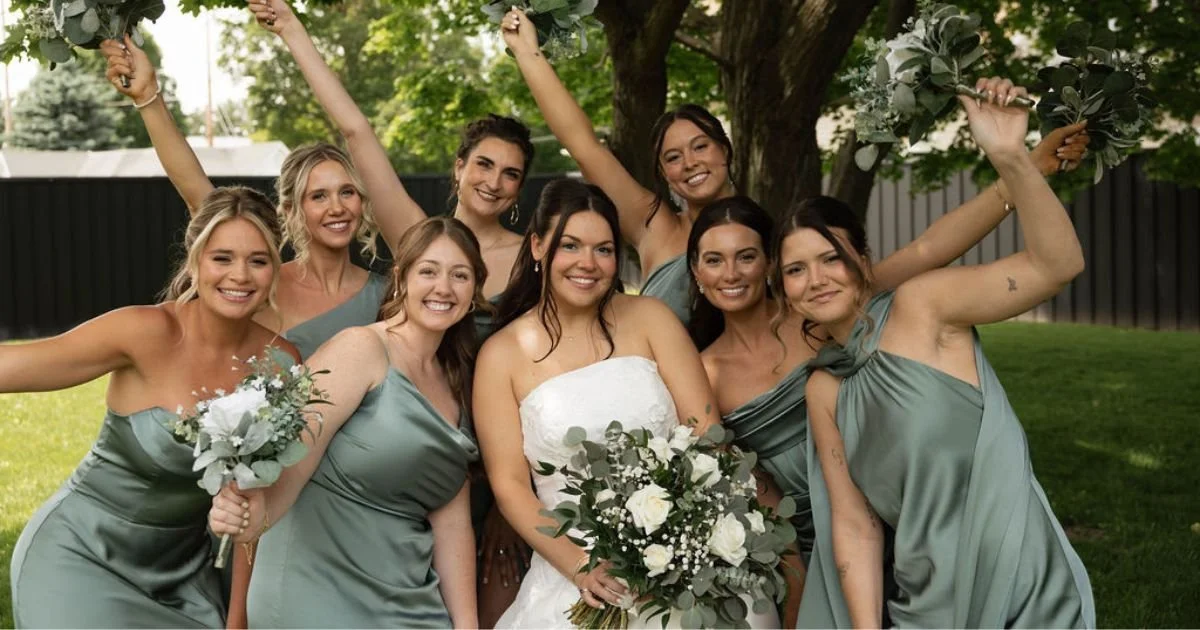
A classic bridal look leans on clean lines and quiet structure rather than anything trend driven. A-line and ball gown silhouettes are forever favorites is how Rocky Mountain Bride frames the two most enduring cuts for a traditional bride, with a sheath silhouette offering a more tailored alternative for brides who want the same simplicity in a closer fit. Fabric choices tend to favor satin, lace, and tulle, and small details like pearls or soft beading add texture without pulling focus from the dress itself. White and ivory remain the two colors that never fall out of style for a classic bride, which is exactly the palette carried throughout Kaleidoscope's own Classic Transformation Package.
Satin, silk and charmeuse are generally the foundational fabrics, a point Alexandra Robyn makes as well, noting that white lace, tulle, and chiffon overlays give a dress that same romantic, feminine quality a traditionally styled bride is usually after. Necklines tend to stay simple too, with a sweetheart or bateau cut doing the same quiet work the rest of the dress does, letting the fabric and silhouette carry the look instead of an elaborate design detail.
For bridesmaids, the classic approach stays just as restrained. Soft, muted tones like blush, champagne, evergreen or navy hues keep the bridal party cohesive without introducing a competing color into the room, and chiffon or satin gives every dress a flattering drape regardless of body type or individual cut. The same two or three color discipline that governs the florals and table settings applies here too, which is part of why a classic bridal party photographs so consistently well against a room styled the way Kaleidoscope's Classic package is.
Classic Groom and Groomsmen Attire
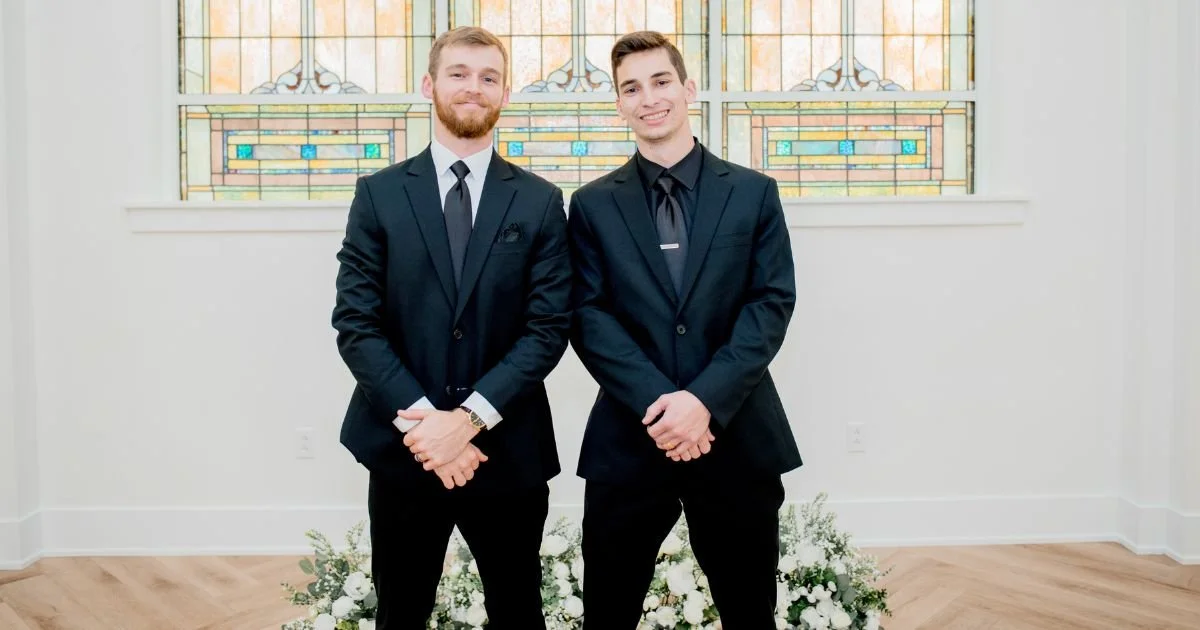
Classic groom style keeps the same restraint the rest of the aesthetic depends on. Black tie attire is the standard starting point, with the exact shade of the tuxedo shaped by the time of day and formality of the event rather than left to personal whim. Paying attention to etiquette when choosing menswear is a detail worth taking seriously, since a groom's look is meant to complement the bride's, not compete with it or fall in as an afterthought.
A true black tie tuxedo follows a fairly strict formula. Tuxedos should always be black and outfitted with a tuxedo shirt, trousers, and a classic black tie as formal requirements, rounding the look out with accessories like a pocket square, cufflinks, and studs rather than anything trend driven. Some grooms choose a bow tie for a more formal look.
For groomsmen, the goal is cohesion rather than an exact match to the groom. Coordinating through a shared color palette, matching bow ties, or consistent boutonnieres lets the group photograph as a unified party without every man wearing an identical outfit down to the last detail. Kaleidoscope's own styling leans into this same simplicity, which is part of why the aesthetic photographs so cleanly against the venue's ivory and greenery palette.
A “Word" on Stationery and Calligraphy (pun intended)
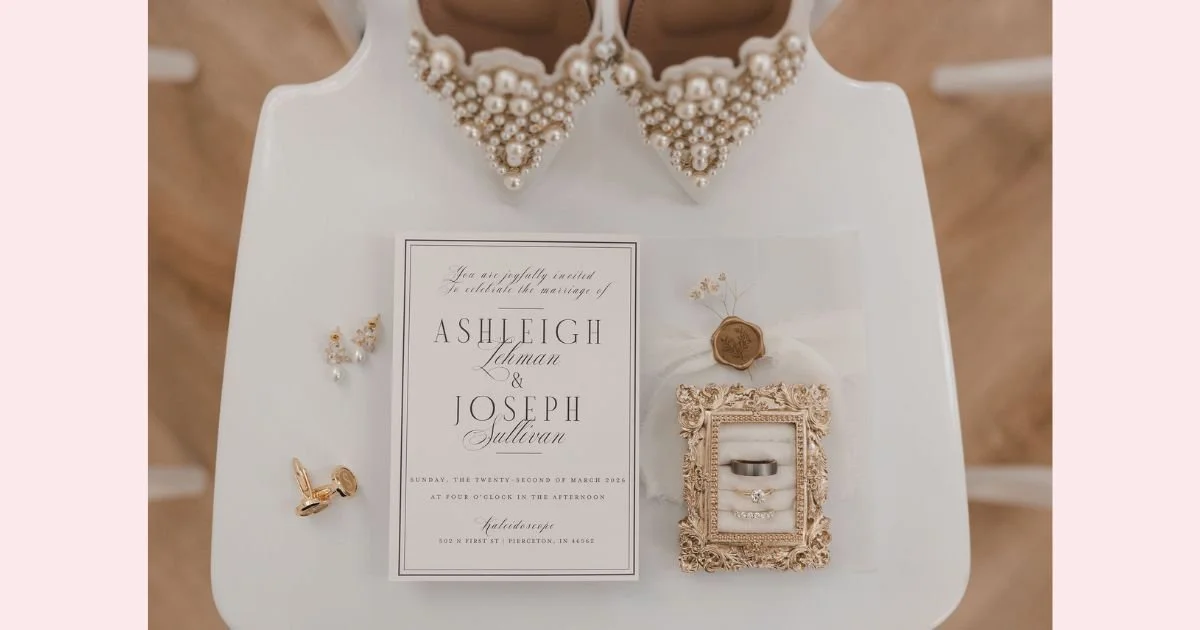
Stationery is not part of Kaleidoscope's Classic Transformation Package, but it is worth a brief mention for couples building out the full look. Handwritten calligraphy on invitations, place cards, and signage is one of the most consistent details classic weddings lean on for a bespoke, lasting feel. Vogue quotes event designer Jennifer Zabinski on this point, noting that hand calligraphy on the small details gives a bespoke look that never goes out of style. Combining cursive and serif font styles also adds a luxurious, opulent touch to detail. If you love the aesthetic Kaleidoscope's package creates in the room itself, working with a local calligrapher or stationer to carry that same script feeling into your invitations is a recommended next step, even though it falls outside what the venue provides directly.
Classic Wedding Color Palettes
Classic wedding colors center on ivory, white and off whites, and soft neutral greens, often built around a single accent tone rather than a full palette of competing shades. This keeps the room feeling unified, which is partly why the look has held up across so many decades of weddings.
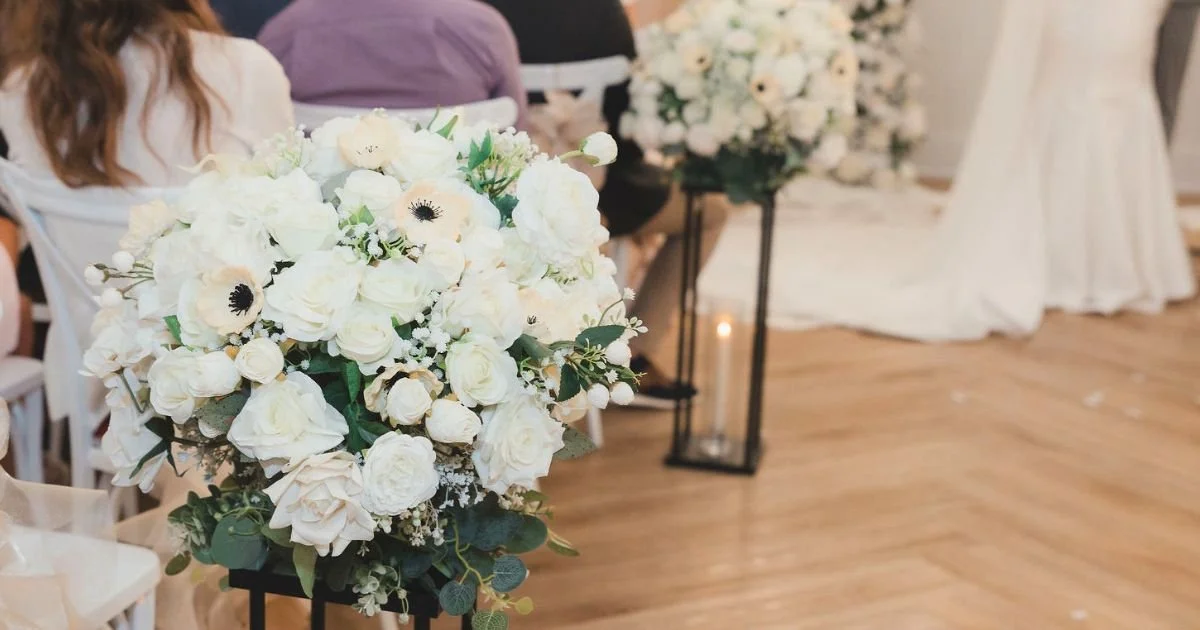
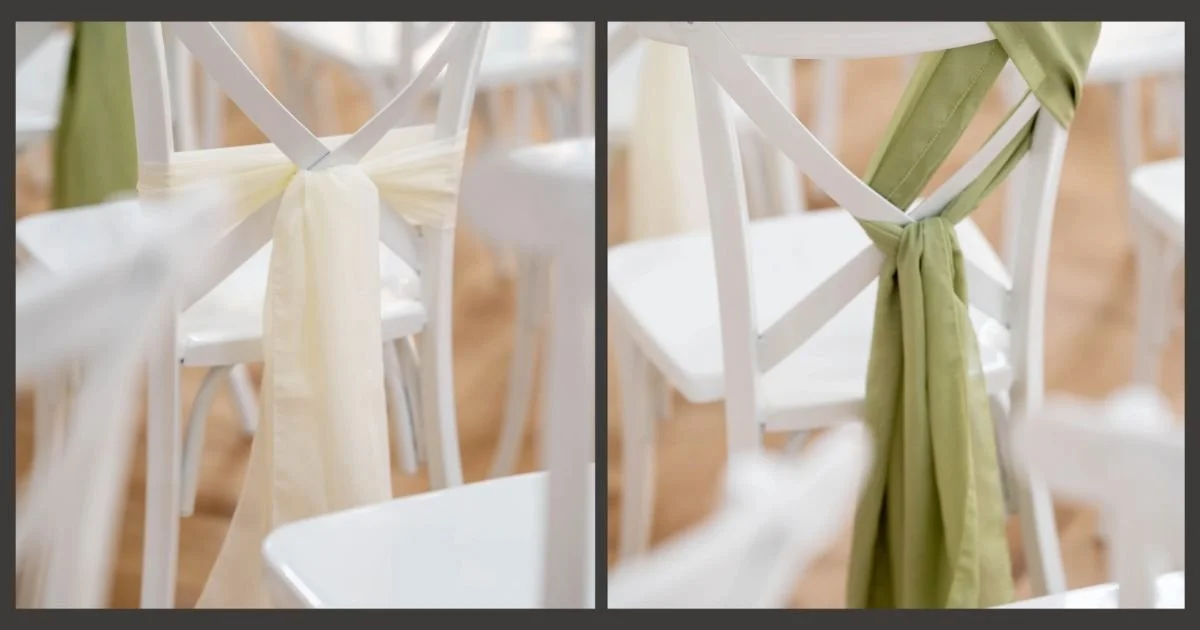
Sage green paired with ivory is one of the most enduring combinations in this space right now, largely because it reads as fresh without abandoning the softness classic couples want. You will see this exact pairing in the bouquets and chair sashes at Kaleidoscope, where ivory and sage ribbon ties against white cross back chairs give the ceremony space warmth without introducing a competing color.
Gold works its way in as an accent metal rather than a dominant color, most often through candle holders, table weights, or small hardware details. It catches light beautifully against ivory linens and never overwhelms the softer palette around it. “Elegant metallics” help add texture and shine against the rest of the aesthetic.
The Right Flowers for a Classic Wedding Aesthetic
Classic weddings incorporate white roses, ranunculus, gypsophila, and eucalyptus, arranged as garlands or loose, romantic clusters rather than tight, structured bouquets. According to Bedford Village Inn, white roses paired with lush greenery garlands feel fresh in any era, which is exactly why this combination has remained a defining choice for classic weddings rather than falling out of fashion the way trend driven floral bouquets eventually do.
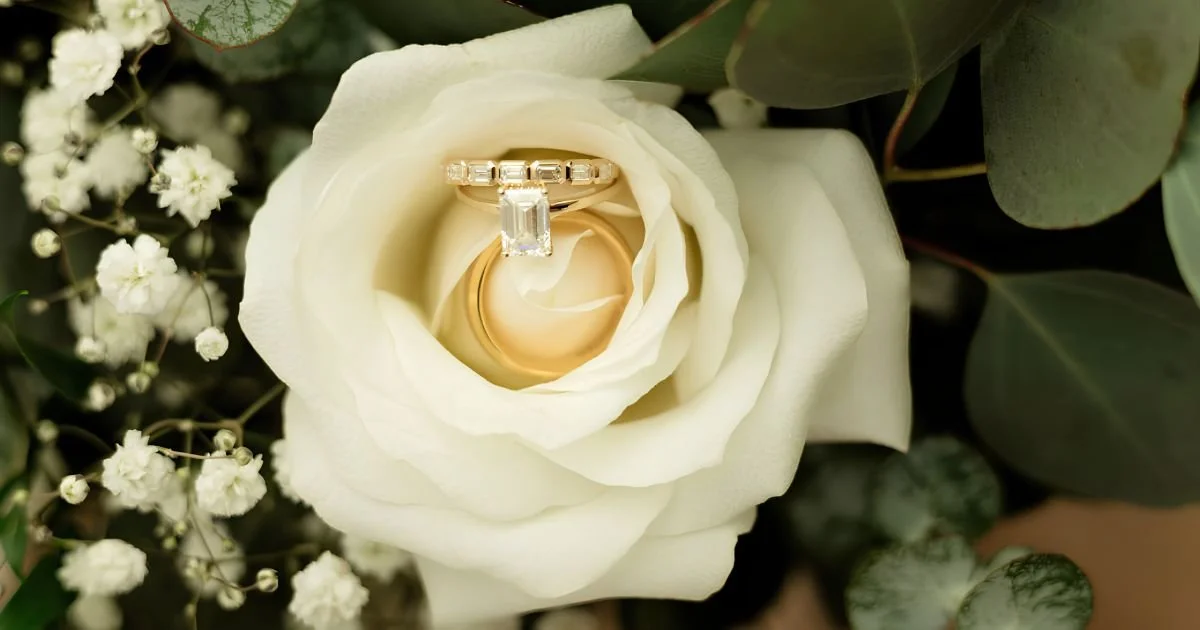
Garlands are protean enough to enhance a venue, whether they are draped along an aisle, wrapped around reception chairs, or woven into a sweetheart table backdrop, and that versatility is a big part of why this floral style has become a signature look across classic wedding design generally.
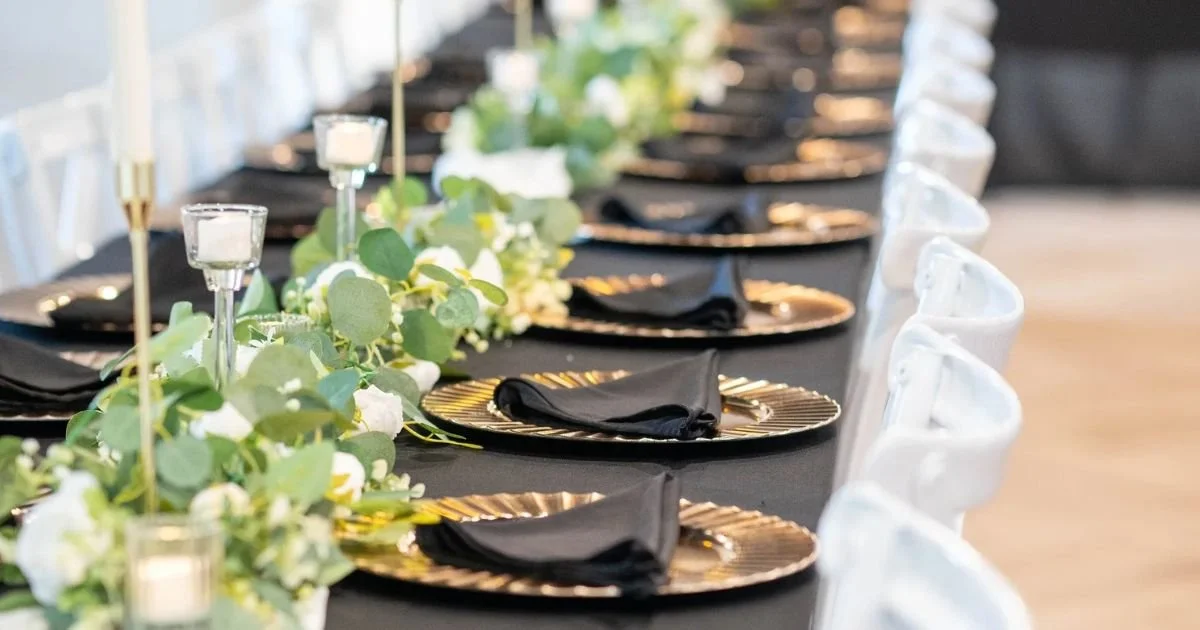
Throughout Kaleidoscope’s Classic Transformation package, you can see this exact approach running the length of the reception tables or in arched floral pillars behind the altar. Long garlands of white roses, ranunculus, and eucalyptus stretch down the center of each round table, mixed with votive candles and tall taper candles in glass cylinders. The effect is a table that feels lush without feeling overdone, which is the balance classic design is always trying to strike.
Inside Kaleidoscope's Classic Transformation Package
Kaleidoscope's Classic Transformation Package takes these theories and visions and turns it into a fully styled themed across its two spaces: the ceremony venue and reception hall. And it does so inside a building with architecture and interior design that already does half the work. The venue is a restored, historic church with its original stained glass windows preserved, paired with modern climate control so the space stays comfortable regardless of season.
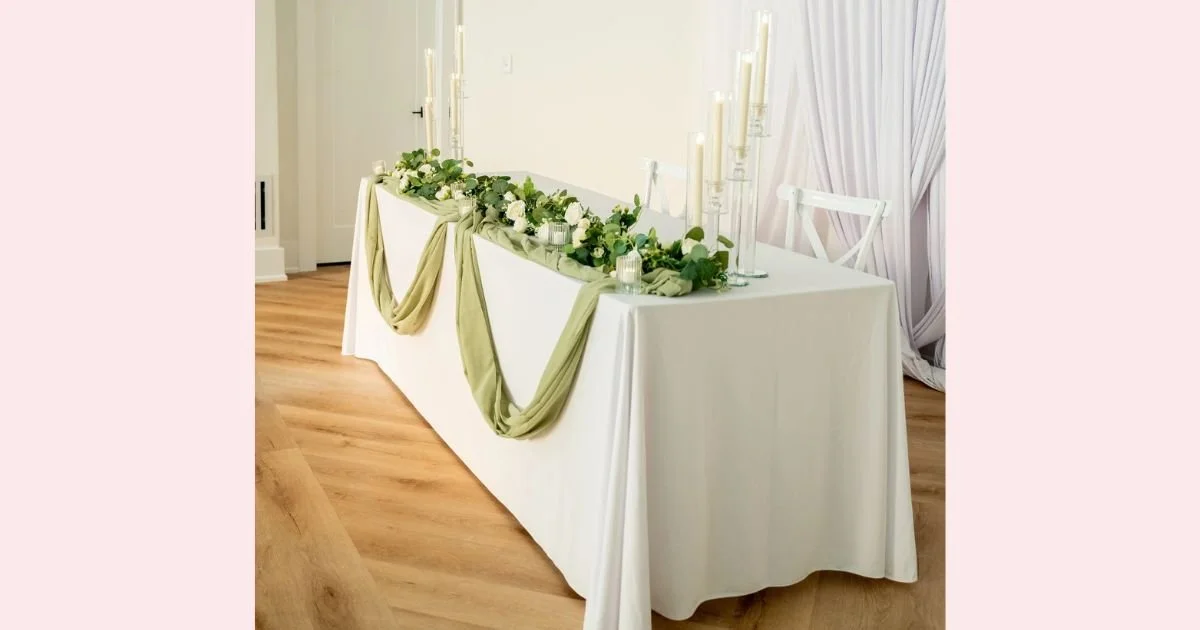
At Kaleidoscope, we have built this package around the idea that classic elegance should not require a couple to bring in outside decor to make a historic space feel finished. The package includes white cross back chairs with ivory and sage sash ties, long floral garlands of white roses and eucalyptus running down each reception table, tall glass hurricane candles paired with crystal chandeliers overhead, and a silk draped backdrop behind the head table dressed with the same greenery and rose garland used throughout the room.
An Ivory, White, and Greenery Color Story
Every surface in the package pulls from the a narrow palette that invites a wide range of customization. White cross back chairs are tied with soft ivory and sage sashes, tablecloths stay in a clean ivory or white, and greenery threads through nearly every element in the room, from the chair backs to the table runners to the head table drape. Nothing in the room introduces a fourth color to compete with the other three. That discipline is what makes the whole space read as cohesive the moment you walk in, rather than assembled piece by piece.
Floral Garlands Along Every Table
The reception tables carry long, loose garlands of white roses, ranunculus, and eucalyptus down their full length, the exact arrangement style you can see running table to table across the reception hall. These are not tight, structured centerpieces. They are meant to feel like they grew that way, blooms and greenery folding into each other with just enough imperfection to feel organic rather than assembled. Votive candles and tall taper candles rise up out of the greenery at even heights, giving the whole table a soft, flickering glow once the sun starts to set through the stained glass. The effect is closest to what Evergreen Venue describes as flower garlands imbuing a venue with a sense of natural beauty and whimsical charm, delicate strands of bloom and foliage draped along a table rather than boxed into a single, static centerpiece.
Silk Draping at the Sweetheart Table
Behind the head table, soft silk fabric drapes down in loose, gathered folds, the same sage green found in the chair ties repeated here at a larger scale. The fabric catches the light differently than the hard surfaces around it, giving the head table a softness that grounds the rest of the room's crystal and glass. Beneath the draping, the same floral garland used on the reception tables continues along the front edge of the head table, tying the two spaces together visually without repeating a single detail exactly. It is a quiet detail, but it is the one that keeps the room from feeling like a collection of separate design choices rather than one finished space.
Crystal Chandeliers and Stained Glass Windows
Overhead, tiered crystal chandeliers hang from the vaulted ceiling, catching and refracting light throughout the day as it moves through the church's original arched stained glass windows. This is the clearest example in the entire package of the minimal decor principle described earlier. Decorating minimally to emphasize the beauty of the surrounding architecture is the goal here, and allows the decor to match the greens, teals, and tans in the stained glass. The chandeliers add sparkle without adding color, and the windows are never dressed, covered, or competed with by anything else in the room. They are simply allowed to be the focal point they already are.
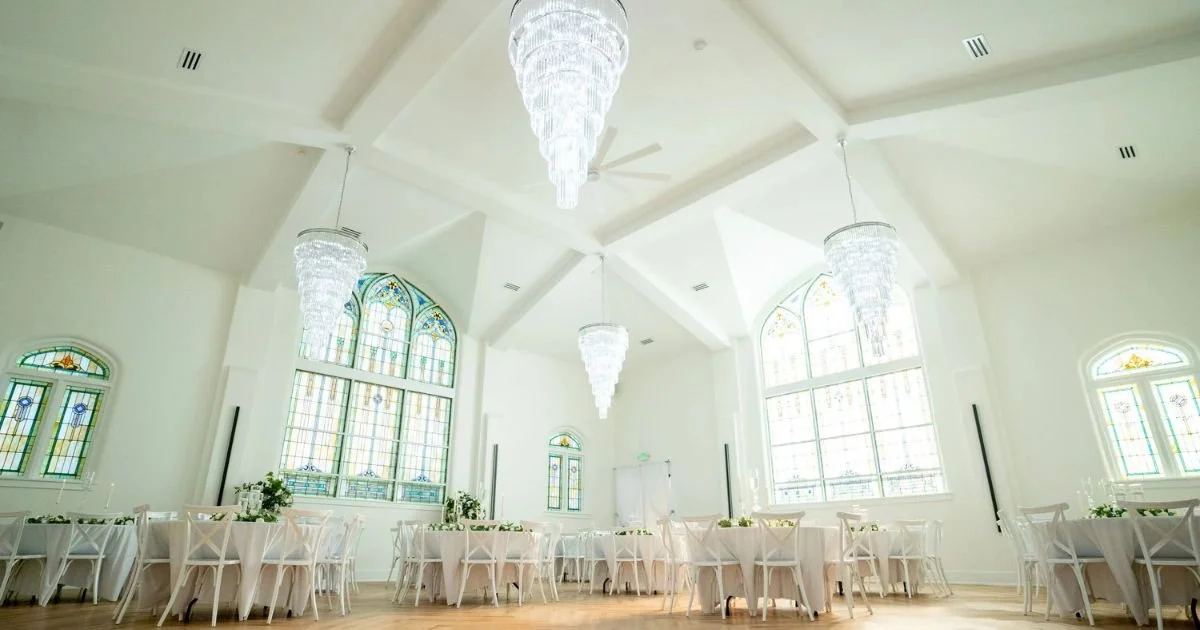
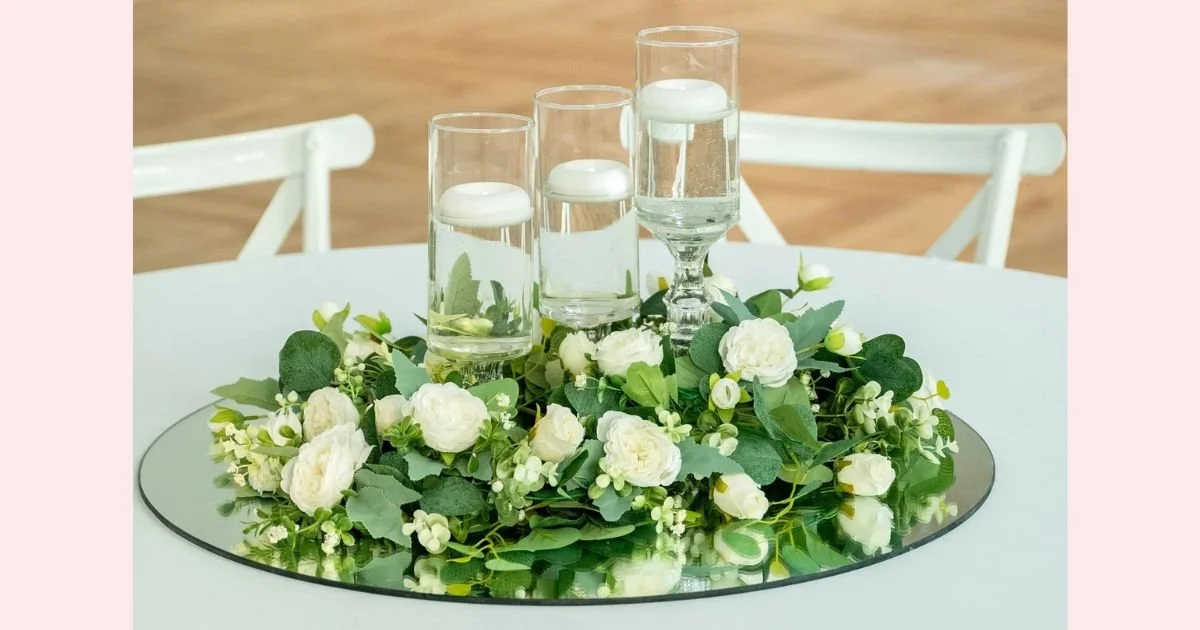
Centerpieces are built on mirrored bases topped with floating candles and clusters of white roses, a detail that adds movement and light without adding color that would compete with the room's palette. The herringbone wood flooring throughout the reception hall stays exposed rather than covered, letting the natural warmth of the wood balance the cooler tones of the crystal and glass above it.
This is where the earlier point about restraint becomes visible rather than theoretical. Every element in this package, from the chair ties to the table runners to the head table drape, pulls from the same narrow palette of ivory, white, sage, and gold. Nothing in the room is fighting the stained glass for attention, which is exactly the outcome Inside Weddings points to when it recommends decorating minimally so a venue's existing architecture becomes the centerpiece rather than competing with added decor.
What a Classic Church Wedding Looks Like at Kaleidoscope Weddings and Events
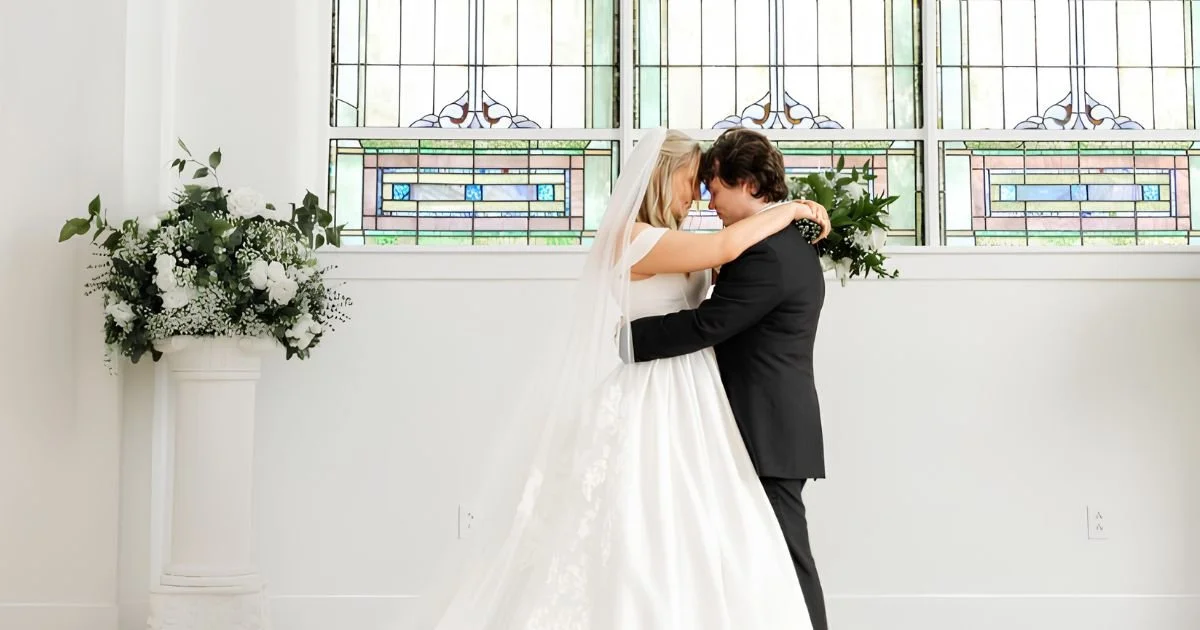
A classic church wedding looks like a ceremony space where the architecture leads and the decor supports it, using minimal additions so original details like stained glass and vaulted ceilings remain the visual focus. That principle guides every ceremony setup Kaleidoscope styles inside its restored sanctuary.
The ceremony space at Kaleidoscope uses rows of white cross back chairs tied with ivory and sage sashes, arranged on either side of a herringbone aisle that leads toward the church's original arched stained glass window. Two floral urns of white roses and greenery flank the altar space, and crystal chandeliers hang overhead, but nothing in the room competes with the window itself. Balloons Online notes that draped silk fabric around columns and altar areas adds a gentle, romantic movement to a ceremony space, and that same soft draping appears behind Kaleidoscope's head table for the reception that follows, carrying the same visual language from ceremony into celebration.
The result is a ceremony that feels rooted in the building's own history rather than staged inside it. Couples get the emotional weight of exchanging vows inside a century old church, styled just enough to feel intentional without ever distracting from the space itself.
How the Classic Package Compares to Kaleidoscope's Other Transformation Packages
Kaleidoscope offers multiple transformation packages, and the Classic option is specifically built for couples who want the traditional, ivory and greenery aesthetic described throughout this guide rather than a bolder or more contemporary look. Where some of Kaleidoscope's other packages lean into deeper color palettes, blush pink colors, or more dramatic lighting choices, the Classic Transformation Package stays intentionally restrained, favoring soft neutrals and natural greenery over statement color or heavy styling.
If you are drawn to the black and white photography look, hand lettered signage, and quiet elegance described throughout wedding media covering this aesthetic, the Classic package is built specifically for you. If you are picturing bolder colors, modern lighting, or a more editorial reception look, one of Kaleidoscope's other packages may be a better starting point, and our team can walk you through those options directly.
Frequently Asked Questions About Kaleidoscope’s Classic Transformation Package
What are classic wedding colors?
Classic wedding colors are ivory, white, and soft neutral greens, often anchored by a single accent color like sage or gold rather than a full competing palette. This narrow color story is what keeps a classic wedding feeling cohesive rather than busy, and it is a defining feature of the aesthetic across nearly every classic wedding styled today.
What flowers should I use for a classic wedding?
White roses, ranunculus, and eucalyptus arranged as loose garlands are the defining floral choice for a classic wedding. These flowers work equally well as table runners, aisle decor, or backdrop accents, which is part of why they remain a consistent choice across classic wedding design.
What does a classic church wedding look like?
A classic church wedding looks like a minimally decorated ceremony space where original architecture, such as stained glass windows or vaulted ceilings, remains the visual focus. White chairs, soft floral accents, and simple draping typically support the space rather than compete with it.
What is included in the Classic Transformation Package?
Kaleidoscope's Classic Transformation Package includes white cross back chairs with ivory and sage sashes, floral garlands of white roses and eucalyptus for tables and the head table backdrop, crystal chandeliers, glass hurricane candles, and mirrored centerpieces with floating candles. The full package is styled to complement the venue's original 1919 stained glass windows.
Is the Classic Transformation Package available year round?
Yes, Kaleidoscope's climate controlled reception hall allows the Classic Transformation Package to be booked in any season, though couples planning for peak regional wedding months should reach out early to confirm availability.
Classic wedding elegance is not a trend a venue can fake with rented decor for a single afternoon. It is a restraint that has to live in the bones of a space, in the way light moves through original windows and the way a room stays quiet enough for a couple's own story to be the loudest thing in it. That is what Kaleidoscope's Classic Transformation Package was built to deliver.
If you are still comparing styles or want to see Kaleidoscope's other Transformation Packages side by side, our team would love to walk you through every option available for your day.