
Is a Wedding Budget Under $10K Possible in Indiana?
Yes, weddings under $10,000 are totally possible (even in 2026!), and don’t worry, you’re not the only couple asking. There are articles, reports, and entire forums online dedicated to solving this question, full of real couples comparing notes on what worked and what did not. If you have been quietly freaking out whether $10,000 makes you the exception rather than the rule, take a deep breath and realize that there are clear tips and tricks to help you stay under budget and still have an over-the-top time. Planning a different kind of wedding than the one Pinterest keeps showing you, and that difference is not a downgrade.
Is a Wedding Under $10,000 Realistic
A wedding under $10,000 is more than realistic. It’s close to what half of American couples actually spend once you look past the Instagram videos and headlines. The number you keep seeing in articles, somewhere around $34,000, is an average, and averages get pulled upward by a those very expensive, big budget weddings. Median wedding cost data tells a completely different story. If you need a reminder from junior high math, the media is the exact middle number of a list of numbers from lowest to highest. The median wedding cost sits closer to $10,000 to $20,000, which is a far more honest benchmark for what a typical wedding costs.
You don’t need to plan by guessing. There is a Reddit community with tens of thousands of members organized to seek help and help others achieve a 10k wedding, and the posts inside it provide hope, stories, and inspiration for every wedding decision. Couples post full cost breakdowns after the wedding is already over, itemizing everything from the officiant to the last minute tailoring, and the comment sections fill up with other couples asking follow up questions about specific vendors or line items. It exists because thousands of people are actively solving this exact problem in public, in real time, and comparing notes the way you would with a friend rather than a wedding planner or venue.
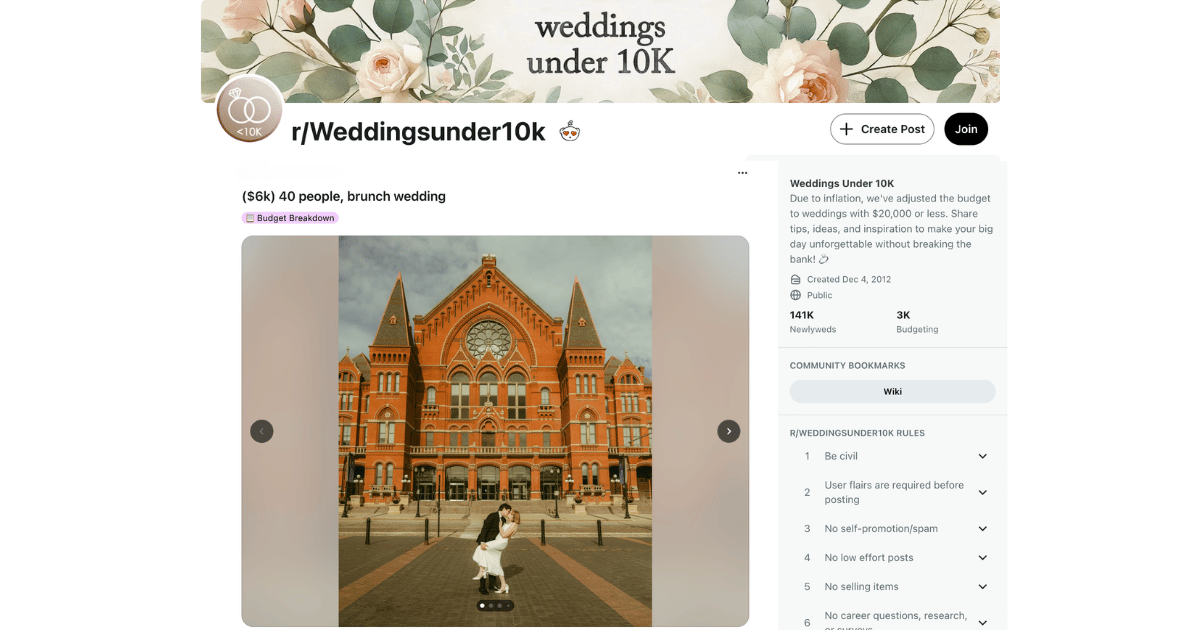
The pattern that shows up again and again inside that community is that guest count and venue choice decide almost everything else. Smaller weddings, somewhere between 40 and 80 guests, paired with a venue that bundles services instead of charging for each one separately, consistently land near or under $10,000. Couples who try to keep a guest list over 120 people almost always report the budget slipping, no matter how careful they were with everything else.
That second part, a venue that bundles services, matters more than most budgeting guides admit, and it is the thread running through the rest of this post.
What the Average Wedding Costs, and Why That Number Does Not Have to Apply to You
According to The Knot's 2026 Real Weddings Study, which surveyed over 10,000 couples who married last year, the average American wedding cost $34,200. That number gets repeated everywhere, and it is technically accurate, but it describes a blended average across every budget tier in the country, from backyard ceremonies to six-figure weddings in ballroom galas.
The same study breaks its data down by spending bracket, and that breakdown tells a different story. Couples working with $15,000 or less spent an average of $8,900, well inside a $10,000 target. Once your peer group narrows from every couple in America to couples planning something closer to your own budget, the number stops feeling impossible and starts feeling normal.
Venue and catering together typically consume 45% to 50% of a total wedding budget, no matter the overall size of that budget. On a $10,000 total, that puts roughly $4,500 to $5,000 toward the two biggest line items combined. This sounds tight, but emphasizes the importance of choosing a venue that includes catering support, furniture, and staffing inside its base fee rather than charging separately for each.
Think of it this way. A guide written for a couple spending $34,000 is solving a completely different problem than you are. They are usually deciding between two expensive options. You are deciding which expenses to fold into one and which to skip entirely, and that is a much more solvable puzzle once you see the real numbers behind it.
What Deserves the Bigger Slice of Your $10,000 Wedding Budget

Most budgeting guides hand you a national percentage chart and call it a plan. Venue gets roughly a third, catering another chunk, attire a smaller slice, and so on down the list. That framework works fine when every couple is renting a bare venue and hiring separate vendors for every speciality. It works much less well once you introduce an all inclusive venue into the math, because a venue fee that already covers tables, chairs, linens, staffing, and beverage service is not the same purchase as a bare rental, even if the dollar figure looks similar on paper.
Charles Schwab's guide to wedding budgeting recommends a technique worth borrowing regardless of your venue type: treat your category budgets as flexible, not fixed. If you come in under budget on one line, music is their example, that leftover money moves to whatever category you actually care about, dress, photography, or flowers. The point of a $10,000 plan is not to hit every category's textbook percentage. It is to spend intentionally on the two or three things that matter most to you a year from now, and cut hard everywhere else.
Here is what that looks like with real numbers. Say your venue and full decor come to $5,750, a photographer runs $1,800, a simple but savory sit down or buffet meal for 60 guests runs $2,100, and your dress, secondhand, comes to $450. That is $10,100 before flowers, favors, or a cake, which is exactly why the next section matters so much. Every dollar you do not spend on rentals, staffing, or bar service because your venue already includes them is a dollar available for the things a national percentage chart assumes you are paying for twice.
This is exactly where an all inclusive venue changes the math in your favor. When furniture, staffing, and beverage service are already folded into one fee, the percentages a national chart assigns to separate rental, staffing, and bar categories collapse into a single number, freeing real dollars for the categories that were never going to be optional anyway, like your photographer or your dress.
How Much Does a Wedding Venue Cost, and Why That Line Item Decides Everything
The national average cost of a wedding venue alone is $12,900, already more than the entire $10,000 target you’re working with. That single statistic explains why venue selection is the highest leverage decision in this entire budget, more than the dress, more than the flowers, more than the cake.
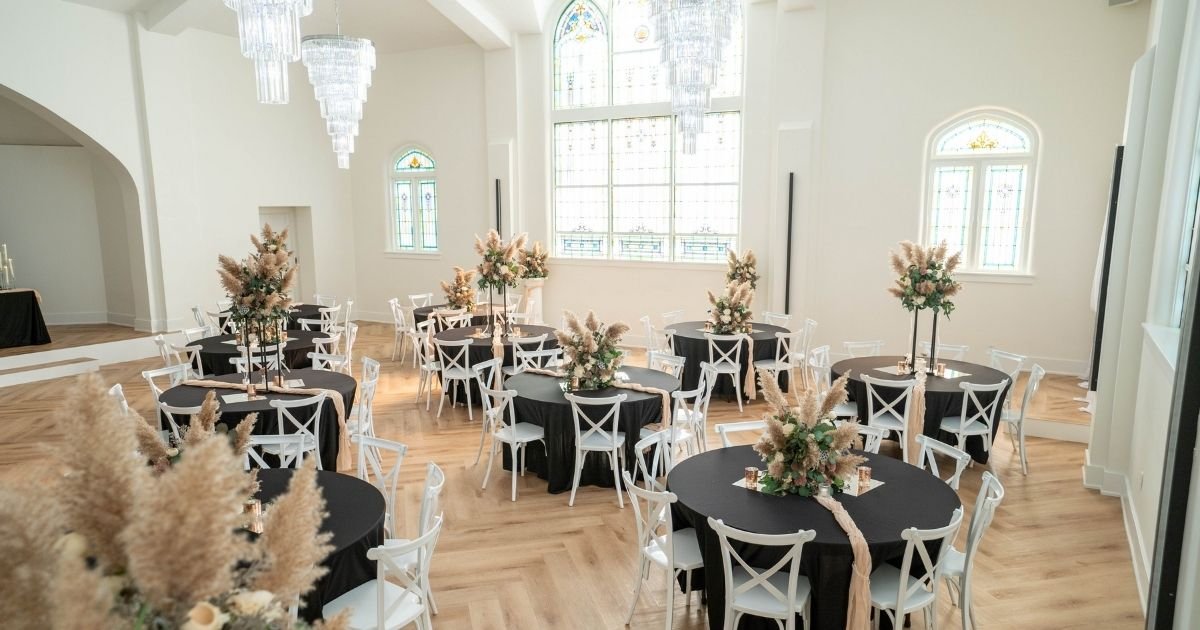
At Kaleidoscope Weddings and Events, we built our pricing specifically around this exact problem. Our venue fee runs between $3,750 and $7,150 depending on the day of the week and the season, and that fee already includes onsite staffing for setup, teardown, and cleanup, complimentary tables, chairs, and black linens, and full beverage and bar service with bartenders included. An off peak Friday or Sunday date between January and April could book at $3,750, which leaves the bulk of a $10,000 budget for catering, photography, and attire before a single additional vendor is booked.
For couples who want the design work handled as well, our Transformation Package adds full decor setup and teardown for the ceremony, meal, and reception spaces for a flat $1,999, meaning venue plus full decor can land near $5,750 total, leaving over $4,000 for everything else. That is not a marketing number, it is the same published pricing anyone can see on our own site before ever scheduling a tour.
Once you know what your venue fee actually includes, you can stop guessing at percentages and start doing real math with your remaining budget. Ask any venue you are considering the same three questions: does the fee include tables, chairs, and linens, or are those rented separately?; does it include a bar package, or do you need to hire outside bartending staff?; does it include setup and teardown staff, or is that your responsibility on the day? The answers to those three questions will tell you more about your real total cost than the headline venue fee ever will.
Cutting Costs Without Cutting the Magic: Friends, Family, DIY, and Secondhand Finds

Vogue Magazine followed a couple who pulled off a complete wedding, ceremony, reception, and catering, for under $10,000, and their strategy was refreshingly simple. They trimmed the guest list down to close family and friends, then spent what they saved on the next two major things on their list, photography and food. Nothing about their day looked cheap, because their budget wasn’t cut, it was just used wisely.
Your dress is one of the easiest places to redirect money without anyone noticing. Searching for wedding dresses on resale marketplaces like Mercari and Poshmark are full of gently worn designer gowns at a fraction of the original retail price, since most brides only wear a dress once. Knowing what cut or design you’re looking for is a great tip, and use the silhouette and designer name rather than the word wedding alone, since generic searches get flooded with bridesmaid and guest dresses. Apply the same logic to finding bridesmaid dresses and even decor pieces. Frequently searching on Facebook Marketplace often turns up centerpiece vases, arch frames, and signage that someone else bought once and is thrilled to sell for almost nothing.
Do you have a creative friend who is good at design work? Ask them. Canva has free wedding templates for everything from seating charts to welcome signs, and a friend with a good eye can turn a template into something that looks custom in an afternoon. Print shops at most office supply stores will output foam board signage for under $15 a piece, which is a fraction of what a custom signage vendor charges for the same finished product. Turning to friends and family add to the feeling of personalization to achieve a truly customized wedding day.
Timing is worth building your plan around too. Saturday weddings run 25% to 35% more expensive than a wedding held on a Friday or Sunday, purely because of demand. A Friday evening wedding gives your guests a built in day off before the weekend even starts, and it can shift your total budget meaningfully without changing a single other decision you have already made.
Smaller swaps add up too. Digital invitations instead of mailed paper ones are a modern, free approach and gives you the ability to send free reminders for RSVPs. A simpler dessert table instead of an elaborate tiered cake is a smart way to appease to everyone (seriously, who is going to say no to homemade chocolate chip cookies?), and asking an ordained friend or family member to officiate rather than hiring an outside officiant are the kind of changes guests won’t think about twice, but they quietly protect hundreds to thousands of dollars for the parts of the day you do want people to remember.
What A $10,000 Wedding Can Look Like, Line by Line
Percentages and averages are useful for planning, but nothing makes a budget feel real like seeing where every single dollar actually goes. Here is a hypothetical receipt for a real Indiana wedding with 60 guests, on a Friday date, including DIY decor instead of a paid design package, that lands at exactly $10,000:
Venue rental, off peak Friday date: $3,750
Wedding dress, purchased secondhand: $350
Groom's suit, rented: $150
Indiana marriage license: $25
Officiant, friend ordained online, thank you gift: $100
Catering, buffet style for 60 guests: $1,500
Dessert table, homemade treats plus a small bakery cake: $180
Photographer, 6 hours of coverage: $1,400
DJ setup, speaker rental and playlist: $250
Invitations, printed at home from a free template: $40
Invitation postage: $35
Bridal bouquet and boutonnieres, local seasonal flowers: $220
Ceremony and reception florals, DIY arrangements: $300
Welcome and seating signage, printed at an office supply store: $45
Guest book: $30
Favors, homemade treat bags: $75
Bar service, alcohol only, venue fee covers staffing: $500
Hair and makeup, bride only: $150
Dress alterations: $80
Wedding bands, both partners: $600
Day of emergency kit and miscellaneous supplies: $50
Thank you cards: $40
Rehearsal dinner, homemade meal at a family home: $130
Total: $10,000
Nothing on that list is imaginary or best case. Every line reflects a real, bookable service or a real product available right now, priced at what couples regularly report paying for the same category. The point is not that your numbers will match this exactly, your guest count, region, and priorities will shift individual lines. The point is that a full wedding, ceremony, reception, photography, food, dress, rings, and all, fits inside $10,000 when you can see every dollar accounted for instead of guessing.
Is Indiana a Good Place to Get Married on a 10k Wedding Budget?
Indiana is one of the more graceful states in the country for a couple planning on $10,000, and part of that starts with something as basic as the marriage license itself. An Indiana marriage license costs between $18 and $65 depending on residency, with most counties charging $25 for Indiana residents, no waiting period between applying and marrying, and 60 days of validity once issued. Compare that to states with mandatory waiting periods or blood test requirements, and getting married in Indiana becomes a simpler, smoother path to tying the knot.
Northern Indiana specifically offers something a lot of higher cost regions cannot. Pierceton, Indiana, located in Kosciusko County, is accessible to a variety of other larger cities and getaways like Fort Wayne, Warsaw, South Bend, Elkhart, and even up toward Michigan City, Chicago, and Michigan beach towns along Lake Michigan. We built our entire pricing model around the idea that affordability and elegance are not opposites. Original stained glass, a genuinely photogenic space, and a transparent fee structure that never hides costs behind a quote you have to request, this is what we mean when we say we designed this venue for exactly the couple reading this post right now.
If you are planning a wedding anywhere in the Midwest and keep hitting the same wall every other regional guide hits, vague advice with no actual numbers attached, this is the gap Kaleidoscope was built to close.
Frequently Asked Questions About Planning a Wedding Under $10K
Is $10,000 enough for a wedding?
Yes, $10,000 is enough for a full wedding for most couples planning a guest list under 100 people, especially when paired with an all inclusive venue. The Knot's own data shows couples working with $15,000 or less spend an average of $8,900, which sits comfortably inside this range.
What percentage of a $10,000 budget should go to the venue?
With an all inclusive venue, expect the venue portion to run closer to 40% to 60% of your total budget, which sounds high until you realize it means you likely will not need a separate rental company, bartending service, or day of staffing agency at all, since those costs are already inside the fee.
How can I get a designer looking wedding dress for less?
Resale marketplaces are the fastest route to a designer dress at a fraction of retail cost, since the vast majority of listed gowns were only worn once. Compare fees before you buy or sell, since platforms like Mercari and Poshmark charge different commission rates that affect your final price.
What is the cheapest day of the week to get married?
Weekday and Sunday weddings typically run 25% to 35% cheaper than the same wedding held on a Saturday, purely due to demand pricing, making an off peak weekday date one of the single most effective budget levers available to you.
Do I need a marriage license before or after my wedding in Indiana?
You need your marriage license before your ceremony. In Indiana, the license is valid for 60 days after issuance with no waiting period, so most couples apply a few weeks ahead to leave a comfortable buffer without risking expiration.
A wedding under $10,000 is not a smaller version of someone else's wedding. It is the full version of your wedding, built around the choices that actually matter to you, with the rest acting as simple secondary accents. The couples inside that Reddit community you may have already found are proof that this works, and so is the math on our own pricing page.